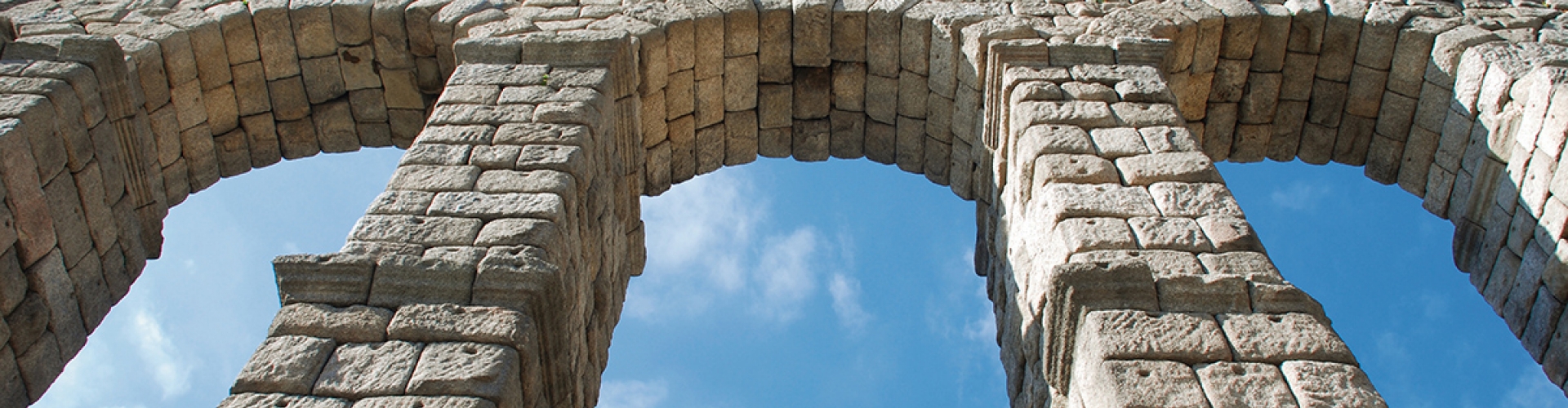
The Segovia Aqueduct, an exceptional feat of Roman hydraulic engineering, is one of Spain’s most iconic and renowned archaeological treasures.Constructed using large granite blocks set ‘dry’ (without ...
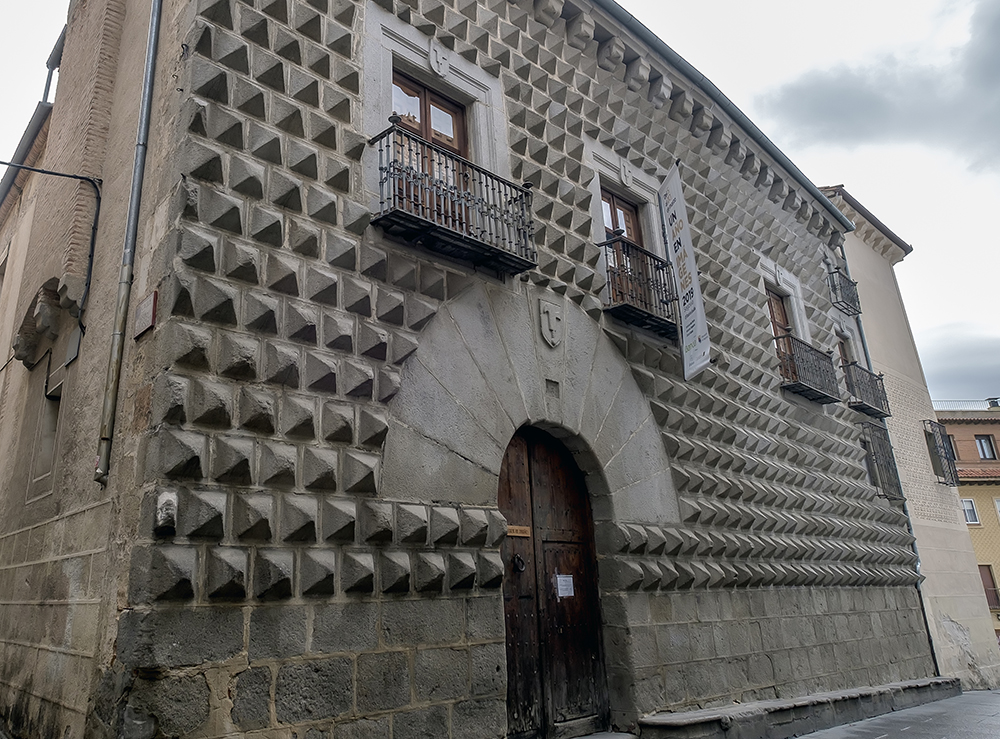
Where the row of houses on Calle Real breaks off, just before reaching the spot where the San Martín Gate once stood and where the Casa de los Picos is located, there is a long parapet. It was built i...
It is situated at the sharpest bend in Calle Real. The façade, built in the early 16th century, is closer in style to medieval military architecture than to the civil aesthetics of the Renaissance.Its...
A treasure waiting to be discoveredThe alfiz framing the coat of arms of its noble owner, the councillor Gonzalo del Río, still evokes the aesthetic of the 15th century, although the moulding no longe...
One building, many namesThis building, whose name varies depending on the sources consulted (Palacio de Cascales, Azpiroz or del Conde de Alpuente), was built in the last third of the 15th century by ...
Municipal Historical ArchiveA building dating from the era of the Catholic Monarchs in the early 16th century.It was originally designed as a grain store, intended to assist the population—particularl...
Misnamed the ‘House of Juan Bravo’Former Palace of the Tordesillas, an example of an urban noble residence. Granite façade, a doorway with a large alfiz decorated with diamond-shaped motifs, and a Pla...
Designated a Site of Cultural Interest.This splendid church, a fine example of Castilian Romanesque architecture, is characterised by a triple colonnaded atrium and three apses, with a Mudejar tower o...
A building constructed in the 15th century, the interior of which has now been fully restored to house the Esteban Vicente Museum of Contemporary Art.It was commissioned by Prince Henry (Henry IV upon...
Although some archaeological remains suggest that the building dates back to Roman times, the appearance of the Torreón de Lozoya took shape between the 15th and 16th centuries, during two distinct pe...