Esteban Vicente Museum of Contemporary Art
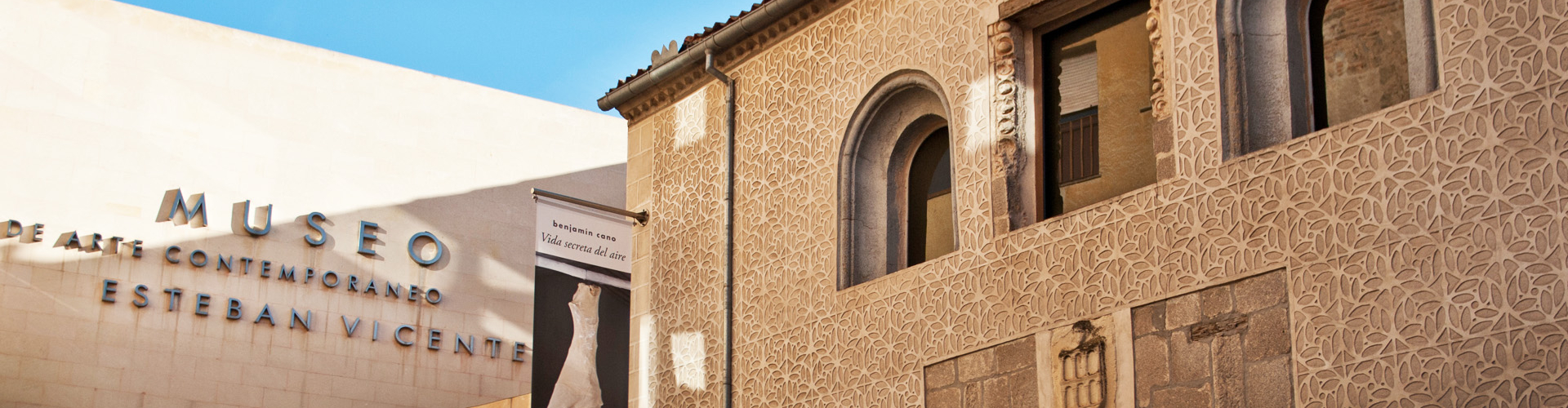

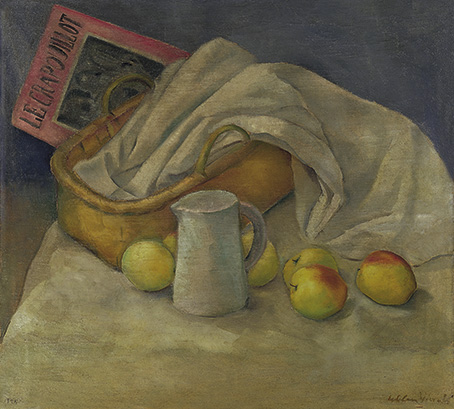
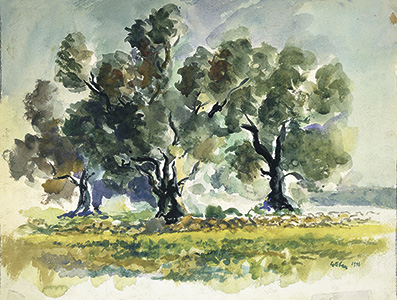
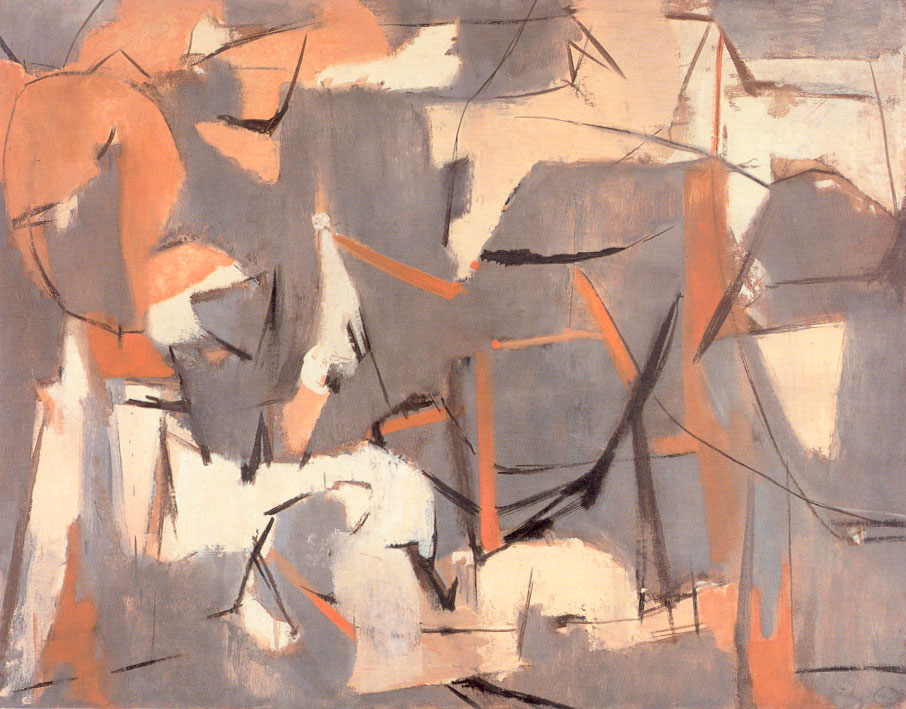
The Esteban Vicente Museum of Contemporary Art, which opened in April 1998, houses a collection of 153 works by the artist Esteban Vicente (Turégano, Segovia 1903 – Long Island, New York 2001), a member of one of the most important movements of the second half of the 20th century: American Abstract Expressionism. This collection, generously donated by the artist, spans his entire artistic and personal life and is therefore a key reference point for researchers and scholars interested in the period.
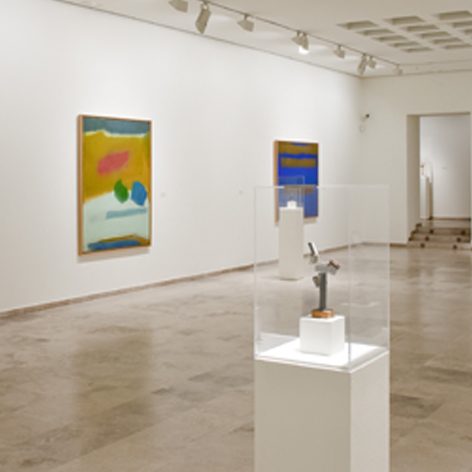
The Museum is located in the centre of the city of Segovia, in the former Palace of King Henry IV, whose construction dates back to 1455. The museum adaptation highlighted the few remaining historical features, and for the design of the galleries, a model was chosen characterised by the creation of spacious, sterile and austere spaces, which allow the works to take centre stage. The Museum preserves a Renaissance chapel with Mudejar coffered ceilings which currently serves as an auditorium where, alongside the exhibition programme, an ambitious programme of interdisciplinary activities takes place, making the Museum one of the city’s most important centres for cultural vitality.

Features of accessibility
Physical Accessibility
Access
- The main entrance has a step of 4 cm in height.
- The door is made of glass, double-leafed, opens manually outwards and has a clear width of 1.09 m each.
- There is a doormat not fixed to the floor as you pass through the door.
- There is a doorbell situated at a height of 1.50 m.
Lobby and reception
- The route to the lobby and reception is accessible, apart from the 4 cm step at the entrance.
- The customer service desk is 1.05 m high, but does not allow a wheelchair user to approach it from the front.
- There is adequate space for wheelchair users to move around and manoeuvre.
Exhibition galleries
- To begin the tour of the exhibition, you must pass through an automatic sliding glass door with a clear width of 1.40 m and a small step of 3 cm.
- The museum is spread over four floors. The second floor (mezzanine between the first and third floors) is not accessible as it cannot be reached by lift, only via stairs or isolated steps. The third floor has isolated steps to access it.
- The main exhibition rooms are on the ground floor, first floor and third floor, and the route is accessible via the lift.
- When moving through some of the rooms, there are 2 or 3 isolated steps 13 cm high.
- The paintings and display cases are at a height ranging from 1.35 to 2 m.
Accessible toilet
- There is 1 accessible toilet cubicle. It is located on the ground floor and the route is accessible by negotiating a 3 cm step and passing through several clear-width openings, followed by a ramp 91 cm wide, 1.40 m long and with a gradient of 17.6%. It is marked with an Accessibility Symbol.
- The access door next to reception leading to the toilet area is manually operated, glazed, opens inwards and has a clear width of 1.15 m.
- There are three access doors, all with the same characteristics, leading to the accessible cubicle: one general door, another leading to the washbasin area and another leading into the toilet cubicle itself. The doors open outwards and have a clear width of 83 cm. The second door has a bolt and can be opened from the outside in an emergency.
- Inside, there is a 360° turning space.
Toilet
- The toilet is located in a corner of the cubicle and has a clear approach space on the left-hand side, at an angle, 70 cm wide, on the right 35 cm and at the front 1.40 m. The seat is at a height of 40 cm and the flush mechanism at 78 cm.
- There is a fixed grab rail on the right-hand side and a folding one on the left-hand side at a height of 69–84 cm, with a gap of 85 cm between them.
Washbasin and bathroom fittings
- Beneath the washbasin there is a clear space 69 cm high and 45 cm deep, allowing a wheelchair user to approach from the front. The tap is a single-lever mixer.
- The mirror is at a height of 87 cm and the rest of the bathroom fittings are at a height of 1 m.
Accessibility for the Deaf and Hard of Hearing
Information and guidance
- Various leaflets are available to visitors with information on the museum’s exhibitions in Spanish, including a summary of the exhibitions’ content and themes.
- The museum has signs indicating the location of the various rooms and facilities, as well as a site map of the building.
Toilets
- The toilet doors do not have a locking system with a visual ‘occupied or vacant’ indicator, nor a clear lower section allowing one to see if anyone is inside.
Height of external buttons: 1.08 m
Door width: 79 cm
Cubicle width and depth: 1.21 m x 96 cm
Height of interior control panel: 95 cm and 1.50 m
Height of handrail: None
Mirror opposite the door: None
Floor with different texture and colour opposite the door: No
Cubicle with audible signals: No
Buttons with numbers in: without Braille or raised lettering
Contrasting colour buttons: Yes
Cabin with visual indicators: Yes
Emergency button with indicator light confirming call registration: No
Signage
Entire building
Signs of the same format: Yes
Average height: 1.50 and 2 m. Font size: 1 cm
Texts and icons in contrasting colours: Yes
Texts and icons in Braille and raised lettering: No
Standardised icons: No
Auditorium
Ground floor
Accessible via a ramp
The ramp is 1.50 m wide, 1.30 m long and has a gradient of 17.6%.
The entrance door is partially glazed, opens outwards, is double-leafed and measures 58 cm each.
It does not have a magnetic induction loop.
Lockers
Ground floor
Accessible
Door width: 1.15 m.
The lockers for storing personal belongings are at a height of between 40 cm and 1.80 m.
Visual Accessibility
Access
- The main entrance has a step 4 cm high, the edge of which is not marked with a contrasting-coloured anti-slip strip.
- The door is made of glass and lacks horizontal stripes or the museum logo in a contrasting colour to aid detection.
- There is a doormat not fixed to the floor upon entering the door.
Exhibition Galleries
- To begin the tour of the exhibition, you must pass through an automatic sliding glass door with no contrasting colour markings.
- The museum is spread over four floors. The second floor (mezzanine between the first and third floors) and the third floor are accessed via stairs or isolated steps.
- The main exhibition halls are on the ground floor, first and third floors, and the route is accessible via the lift.
- When moving through some of the halls, there are two or three isolated steps 13 cm high, the edges of which are marked with a non-slip strip in a contrasting colour.
- The furniture is arranged so as not to obstruct the movement of people with visual impairments. There are also no overhanging elements that pose a risk.
Stairs
- The main staircase connects all floors of the building. It has more than 40 steps with landings.
- All steps are 19 cm high and have a tread width of 30 cm. There is a handrail on the right-hand side when ascending, at a height of 94 cm.
- The staircase is made of marble and the steps have a riser marked with lights and lack a nosing.
- The start and end of the stairs have not been marked with a strip of contrasting-coloured paving with a different texture.
- The edge of the steps has not been marked with a contrasting-coloured anti-slip strip.
Would you like to visit?
- Check here for opening times and prices.
Commets
- None of the customer service staff know Spanish Sign Language (LSE).
- Guide dogs and assistance dogs are permitted.
- Guided tours are available in Spanish and English by prior appointment.
- The museum has a wheelchair available for visitors.