

How it was made...
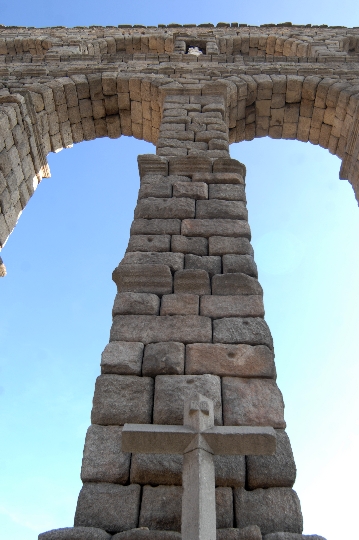
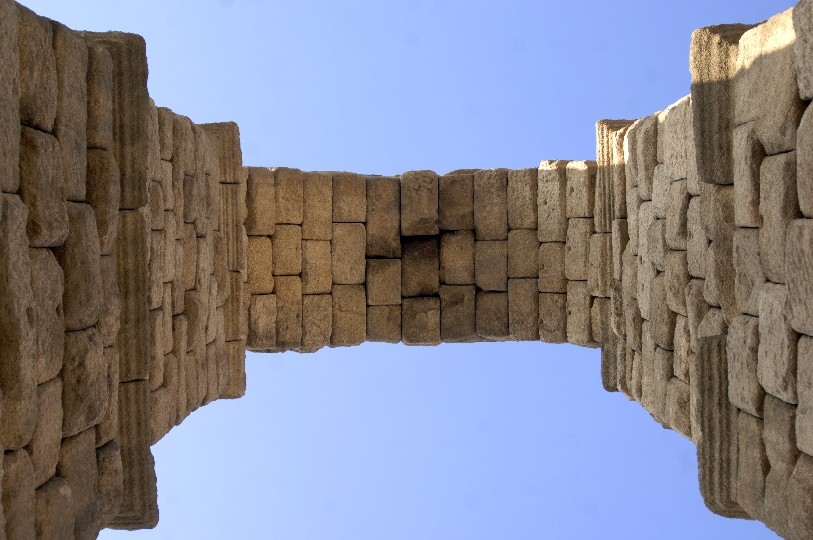
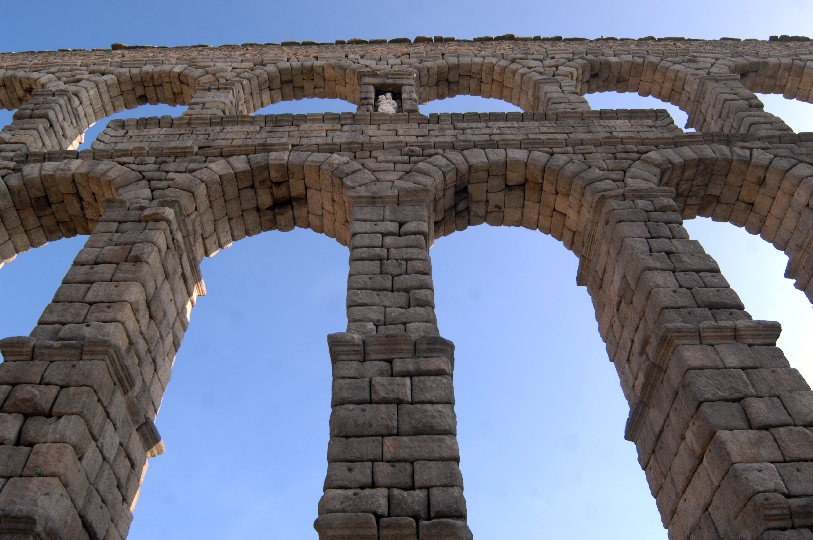
To build it, the Romans used sturdy scaffolding to support the arch frames, onto which the arch segments were fitted; the central stone of each arch, the keystone, had to be perfectly carved into a wedge shape in order to exert sufficient pressure.
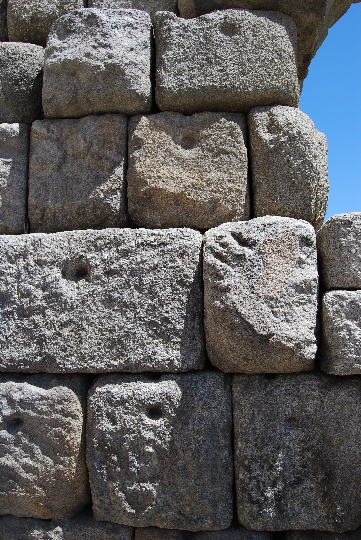
It was necessary to mark the double holes that we can still see today at the ends of each granite block, as large metal tongs were used to lift them. These tongs closed when pulled upwards and were tightened by the weight of the stone itself.
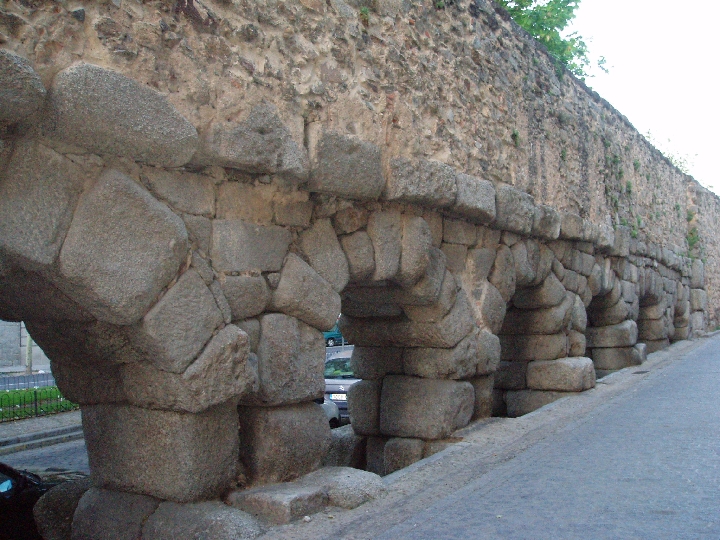
The blocks situated at low height or below ground level were put in place by transporting them directly to their final position, moving them using oak rollers, dragging them up small wooden ramps supported by scaffolding, or moving them using draught animals.
When the height exceeded a man’s height, they used large lifting wheels, operated by slaves, which turned an axle onto which a hemp rope was wound; this, via a system of pulleys, allowed the blocks to be hoisted.
On the scaffolding, another group of workers ensured the blocks were placed in the correct position, adjusting them using levers. Finally, the stonemason, on site, completed the work by shaping and carving the faces of each stone.
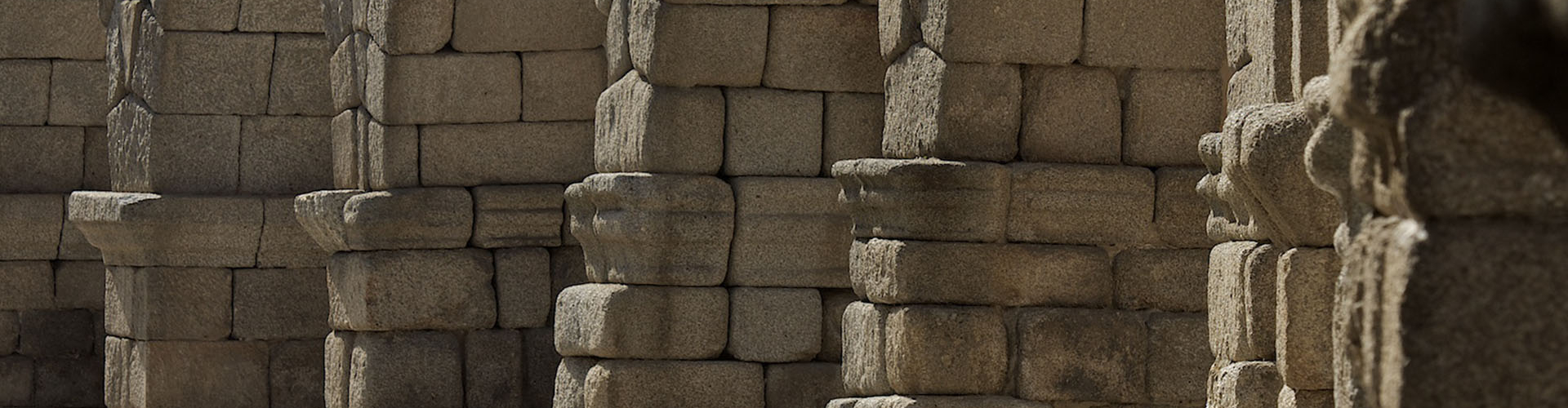
The marks still visible today from the Roman-era construction are those of adjustment, chiselling and rustication: the adjustment marks are the indentations on the upper and lower edges. These indentations were made by inserting an iron lever, which made it possible to position the ashlars in their final place. The chiselling marks are made by striking with a chisel, forming vertical grooves in the ashlars that form the ends of the pillars, whilst the rustication marks were created to stylise the vertical edges.
On some stones, one can still see the notches into which wooden wedges were inserted; these wedges swelled with water to achieve perfect cuts in the granite.
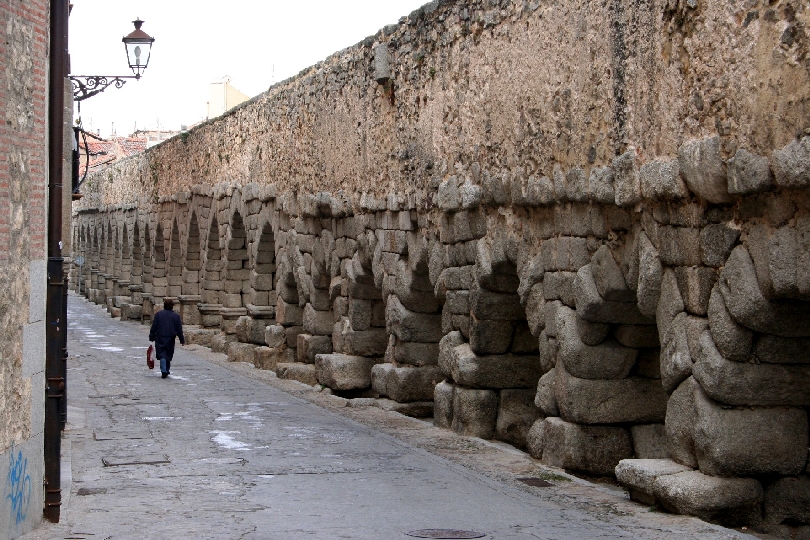
The aqueduct is wider at the bottom and tapers as it rises. This is an ingenious solution that helps it bear its own weight.
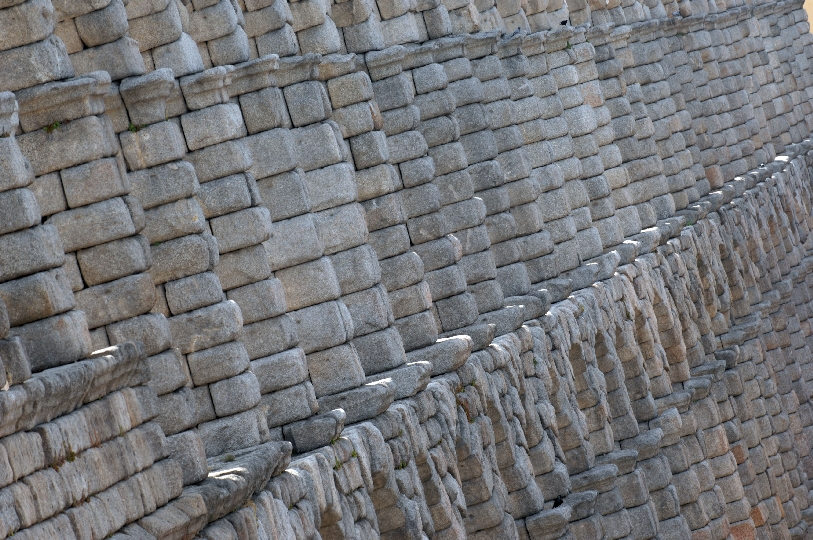
The ‘opus quadrata’ ashlars are joined without mortar, cement or lead. The ashlars are held together thanks to a perfect calculation of the forces exerted by the stones.